Multani Mitti vs Bentonite Clay vs Kaolin: Which Clay Is Right for Your Skin?
10 Nov 2026 · By PurePetal Naturals
Walk into any store selling natural skin care and you will find at least three clays: multani mitti, bentonite and kaolin. All three are marketed for cleansing and oil control, but they are different minerals with different strengths. Picking the right one for your skin type is the difference between a glowing face and a tight, irritated one.
Multani mitti (Fuller's Earth)
- Origin: mined in India and the surrounding region, named after Multan
- Main mineral: hydrated aluminium silicate with magnesium and calcium
- Absorption: high. It pulls oil and impurities strongly.
- Texture: very fine and smooth
- Best for: oily, combination and acne-prone skin, tan removal, body packs and oily scalps
- Cost: very affordable, widely available in India
- Note: can be drying if used with plain water on dry skin. Mix with milk or curd instead.
Bentonite clay
- Origin: formed from volcanic ash, mined mainly in the United States and parts of Europe
- Main mineral: montmorillonite
- Absorption: very high. It swells when wet and has a strong drawing action.
- Texture: slightly grainy, turns gel-like with water
- Best for: very oily skin, deep pore cleansing, occasional detox masks
- Cost: moderate to high in India, often imported
- Note: the strongest and most drying of the three. Not for dry or sensitive skin. Should not be mixed in metal bowls.
Kaolin clay
- Origin: mined worldwide, named after a hill in China
- Main mineral: kaolinite
- Absorption: low to moderate
- Texture: silky, very fine
- Best for: dry, sensitive, normal and mature skin, and for people new to clay masks
- Cost: moderate
- Note: too gentle to make a real difference on very oily skin.
Head-to-head comparison
- Oil absorption: bentonite is the strongest, multani mitti is close behind, kaolin is the mildest.
- Gentleness: kaolin is the gentlest, multani mitti is in the middle, bentonite is the harshest.
- Exfoliation: multani mitti and bentonite both exfoliate; kaolin barely does.
- Tan removal: multani mitti is the best, thanks to its balance of exfoliation and cooling.
- Hair and scalp use: multani mitti is the most practical for hair packs.
- Price and availability in India: multani mitti wins easily.
- Versatility: multani mitti works for face, body and hair.
Which clay for which skin type
- Oily and acne-prone skin: multani mitti for weekly use, bentonite occasionally for a deep clean
- Combination skin: multani mitti on the T-zone, kaolin on the cheeks, or multani mitti with curd for the whole face
- Dry skin: kaolin, or multani mitti mixed with milk once every two weeks
- Sensitive skin: kaolin, or multani mitti with aloe vera and a short application time
- Mature skin: kaolin for gentle cleansing, multani mitti with honey for an occasional glow
- Tanned skin: multani mitti with lemon, tomato or curd
Can you mix clays?
Yes. A common combination is equal parts multani mitti and kaolin for a pack that cleans well but is gentle enough for weekly use on combination skin. Bentonite and multani mitti together make a strong detox pack for very oily skin that should be used only once every two weeks.
The verdict
For most Indian skin types and climates, multani mitti is the best all-round clay. It absorbs oil effectively, removes tan, works on the scalp and costs a fraction of imported clays. Bentonite is worth having for occasional deep cleansing of very oily skin, and kaolin is the choice for dry or sensitive skin that cannot tolerate stronger clays.
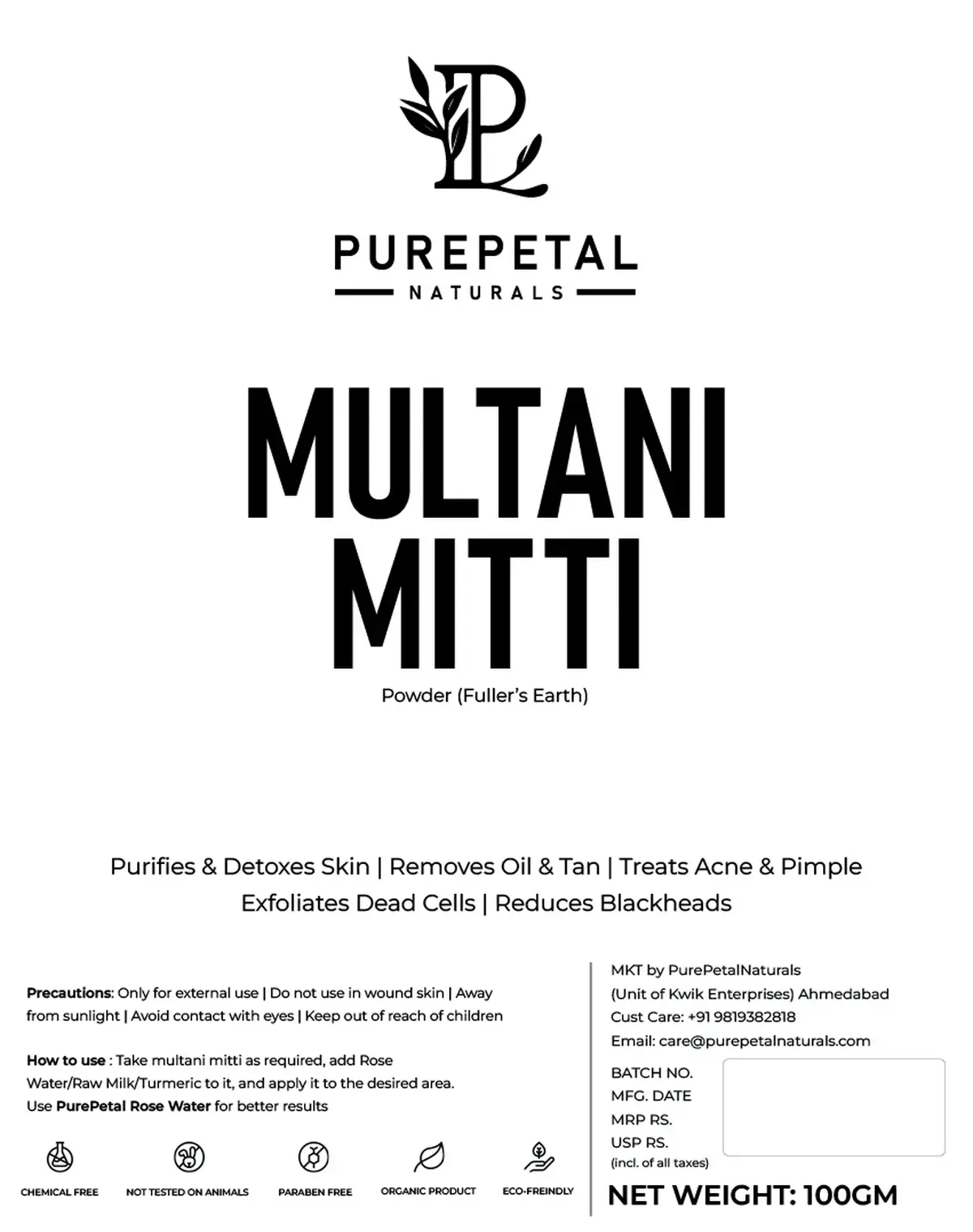
PurePetal Naturals multani mitti powder is fine-milled, chemical free and paraben free, and comes in 100 g and 250 g packs. It is the simplest place to start with clay skin care.
Shop PurePetal Naturals
Ready to try it at home?
Every recipe above starts with a pure, finely milled powder. Ours are made in Ahmedabad with no chemicals or parabens and ship free anywhere in India.